
What Is The Come Bet In Craps
What Is The Come Bet In Craps
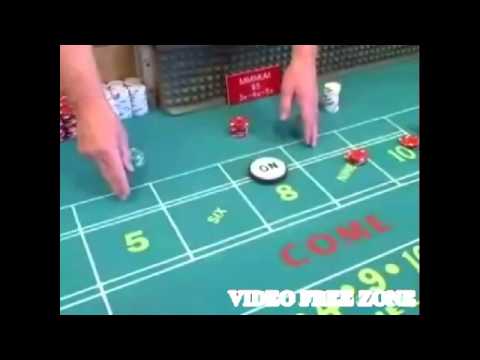
It was time to take a closer look at the real differences between Come Bets and Place Bets, and I was pretty astounded by what I found out. Craps Secrets Tip: Use Place Bets instead of Come Bets unless they’re part of a larger overall strategy. The first thing to do is to check the house edge on both Come Bets and Place Bets. A put bet is like a come bet made after a point has already been established. I don't recommend put bets because the value from come bets comes from the first roll, before any point is established. On a the first roll of a come bet the probability of winning is 22.22%, and the probability of losing is 11.11%. The best way to describe the craps COME bet as a “pass” bet, but which could be made after the point has been established. There is no “Come” bet the first roll, because that would be exactly the same as a “pass” bet. Let’s say you make a “Come” bet and the point was set to 5.
The Come Bet is very similar to the Pass Line Bet, which causes confusion for new players. In terms of odds, payouts, and terms, the two wagers are identical. The difference is when the bets are made.
Players make a Come Bet after a point is established. A Pass Line Bet is made before the come-out roll (before a point is established). Otherwise, both wagers involve betting on the shooter to win.
How the Come Bet Wins
The Come Bet wins if the shooter rolls the point before rolling a 7. If a shooter rolled a 6 on the come-out roll, then the shooter needs to roll another 6 (before rolling a 7) for the Come Bet to win.
Come Bets have the same house edge as the Pass Line Bet: 1.41%. That makes the bet, along with the Pass Line Bet, the second-best wager at the craps table.
The opposite of the Come Bet is the Don’t Come Bet, which is a bet against the shooter.
Craps Glossary
Aces: Betting that the next roll will be the total sum of 2; also, $1 chips
Aces-Ace/Deuce: A one-roll bet on 2 and 3
Advertisement
Any Craps: A bet that the next roll will be 2, 3, or 12; pays 7:1
Any Seven: A bet that the next roll will be 7; pays 4:1
Apron: The outer edge of the felt table layout
Best Bets In Craps And Why
At Risk: Usually, when a player's bet is active or 'in action'
Craps Come Bet Rules
Backline: Same as the Don't Pass Line
Big 6: A bet that a 6 will be rolled before a 7 comes up
Big 8: A bet that an 8 will be rolled before a 7 comes up
Big Red: Placing a bet on Any Seven
Black: $100 chips (which are black in many casinos)
Bones: Another name for dice
Boxcars: Betting on the 12
Boxperson: The table supervisor who sits between the dealers and opposite the stickperson; the one who is responsible for all of the money
Broke Money: Money the casino gives a broke player for transportation home
Buffalo: Placing a bet on each of the Hardways and Any 7
Buffalo-Yo: Placing a bet on each of the Hardways and 11
Buy: Paying the house a 5 percent commission to get true odds on a Place bet
C and E Bet: A proposition bet on the 11 (E) or any Craps (C)
Capped Dice: Crooked dice
Cheques: Another name for chips
Cold Table: When shooters are not making their points
Coloring Up: When a player exchanges small-denomination chips for larger ones; also, when the house exchanges small-denomination chips for larger ones to get the player to make larger bets
Come Bet: Exactly like a Pass Line bet except it's made after the come-out roll
Come-Out roll: The first roll of the dice in a betting round
Craps: The numbers 2, 3 and 12
Crap Out: Rolling the number 2, 3, or 12 on the first roll
Dealer: The one who is responsible for all the bets made on his half of the table
Dime: Two $5 chips
Don't Come Bet: A bet made after the come-out roll
Don't Pass Bet: A bet that the dice will not pass (win); can only be placed right before a come-out roll
Double Odds: An odds bet that is twice as large as the original Pass/Come bet
Down Behind: What the dealer tells a Don't bettor when his bet has lost
Down With Odds: Usually stated and executed by a dealer when paying off a Place Bet and moving the same player's Come bet onto a specific number, ensuring that the player is covered on the specific number
Eyeballs: Two ones; also called snake eyes
Eye in the Sky: Surveillance video or live monitoring of the game from above
Field Bet: A bet that the next roll will be a 2, 3, 4, 9, 10, 11, or 12 (Some casinos make the 5 instead of the 9 a field roll.)
Fifty Yard Line: The middle of the table (a fair roll of the dice always passes the fifty yard line)
Garden: The field
George: A player who always tips the dealers
Green: $25 chips (green in most casinos)
Hard Way: A bet on 4, 6, 8, or 10 that wins only if the dice show the same face; e.g., 'hard 8' occurs when each die shows a four
Hi-Lo: A one-roll bet on 2 and 12

Hi-Lo-Yo: A one-roll bet on 2, 12 and 11
Hit a Brick: What the stickperson says when a die hits a stack of chips and does not roll all the way to the end of the table
Hook: Player positions 4 and 5, near the corner of each end of the table; often referred to as 'inside hook' and 'outside hook'
Hop bet: A single-roll bet on one particular combination of the dice, such as 2-2 or 4-5
Horn Bet: A bet that the next roll will be 2, 3, 11, or 12, placing a bet on each of the numbers simultaneously
Horn High Bet: A bet on three of the horn numbers, with two units on the 'high' number (For example, you could place $1 each on 2, 3, 12, and $2 on the 11 -- in this case, 11 is the high number.)
Insurance Bet: Making two (or more) bets at a craps table, one or the other of which is sure to win
Lay Bet: A bet that a particular number (4, 5, 6, 8, 9, or 10) will not be rolled before a 7 comes up
Layout: The graphic table cover that indicates all places where wagers can be placed
Line Bet: A bet on the 'Pass Line' or the 'Don't Pass Line,' placed before the come-out roll (The shooter has to make a line bet before throwing the dice.)
Little Joe: A pair of 2s, also called a Hard 4
Marker Puck: Plastic disks that the dealers use to mark the point on the craps table (The dealer turns the puck over to the 'off' side when all free odds bets have no action on the next roll.)
Midnight: Betting that the number 12 will appear on the next roll
Monster Roll: A 'hot roll' lasting more than 20 minutes or that generates a lot of winnings for the players
Mop: The stick used by the stickperson to move the dice
Nickel: $5 chip
Outside Numbers: 4, 10, 5, and 9
Ozzie and Harriet: A hard 8 (two 4s)
Parley: Keep your winnings in action
Pass Bet: A bet that the dice will pass (win), also called a 'Pass Line' bet; generally placed immediately before a come-out roll, although you can make or increase this bet at any time
Past Posting: Placing a bet after the dice have landed; illegal
Penny: $1 chip
Pit: The area in the center of the craps tables in a casino, where the floormen watch the games and employees
Place Bet: A bet that a specific number (4, 5, 6, 8, 9, or 10) will be rolled before a 7 is rolled
Player Position: Eight player positions on each side of the standard craps table, numbered 1 through eight moving from the stickperson to the dealer (This is the order in which dealers pay off winning bets and position player wagers on the table layout.)
Press Your Bet: Double your bet
Proposition Bet: A one-roll bet usually on the horn numbers (2, 3, 7, 11, 12)
Point: A 4, 5, 6, 8, 9, or 10 when it is rolled on the come-out roll (The shooter has to roll the point again before rolling a 7 to win.)
Rack: The grooved rail where chips are placed around the edge of the table
Right Bettor: A player who bets with the dice (e.g., that the shooter will roll the point before a 7 comes up)
Seven Out: When the Shooter rolls a seven after a point has been established (This ends his roll and sends the dice to the next shooter, moving clockwise around the table; this is often incorrectly called 'craps out.')
Shooter: The player who is rolling the dice
Single Odds: An additional wager equal to your original bet ('Double odds' means up to two times your bet, 'triple odds' mean three times, and so on.)
Skinny: A bet on Any Seven (a.k.a. Big Red)
Snake Eyes: The number 2 (two 1s)
Still Up: What the dealer says to remind players that a wager is still in play (The dealer may also say it when asking a player if he wants the same bet to stay on the board.)
Square Pair: A hard 8, meaning two 4s.
Stickperson: The casino employee who calls out the roll of the dice and returns the dice to the Shooter; also places and pays out Proposition bets
Stiff: A player who never tips (tokes) the dealer, even when he's winning
Table Odds: The multiple a player may bet (usually on Pass Line and Come bets) behind the original flat bet to get true odds of the dice (The house has no percentage advantage on true odds.)
Taking Odds: Adding a bet to an original Pass Line or Come Bet that pays on the true odds of the dice
Tidy the Bowl: (The stickperson) keeping the extra dice (in the bowl) in a neat row
Toke: A tip for the dealer
True Odds: The real odds of dice rolling any total number (as opposed to 'house odds,' which are the pay-offs written on the layout)
Turning the Dice: When the stickperson flips the dice around with his stick in order to make sure a 7, 11, 2, 3, or 12 isn't showing when they go to the shooter
Wall (a.k.a. Back Wall): The end of the table the shooter throws the dice against in order to complete a fair roll
Whip: The stick used by the stickperson to move the dice
Wrong Bettor: A player who bets against the dice (e.g., that the 7 will be rolled before the point)
Yo or Yo-leven: The number 11 (so it isn't mistaken for the 'seven')
For more information on craps, other casino games, and related topics, check out the links below.
Originally Published: Jul 8, 2004
Related HowStuffWorks Articles
- Casino Games Quiz
More Great Links
- Craps is Math, Mind and Muscle by Frank Scoblete
Bibliography
- Winning Casino Craps, Edwin Silberstang, David McKay Company, Inc., New York, 1979. ISBN 0679146504
- The Encyclopedia of Gambling, Carl Sifakis, Facts on File, New York, 1990, ISBN 0816016380
- Get the Edge at Craps, Frank Scoblete, Bonus Books, Chicago, 2002. ISBN 1566251737
What Is The Come Bet In Craps