
Is Hercules The Son Of Zeus
Is Hercules The Son Of Zeus
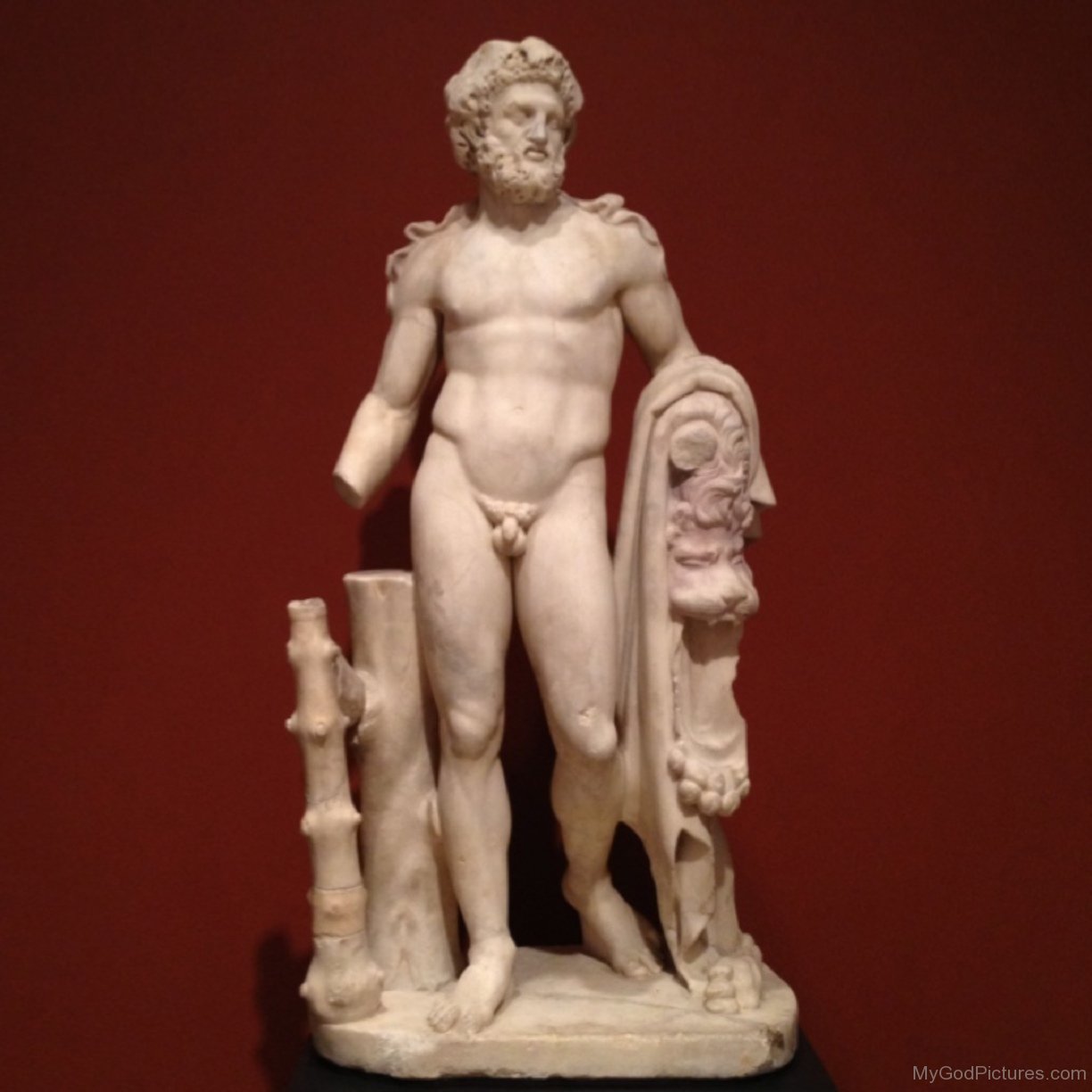
Like many of the most renowned heroes of Greek mythology, Hercules was the son of a god. In fact, his father was the king of the gods himself – Zeus.
Heracles (Ἡρακλἣς) was the mightiest and most famous of the Greek heroes. Heracles was the son of Zeus and Alcmene. The Romans identified him as Hercules. In fact modern scholars preferred to use his Latin name than the original Greek name. His name (Hercules) became synonymous for prodigious strength, courage, or size, eg.
- Hercules was the son of Zeus, king of the Olympians, and the mortal Alcmene.1 Through Zeus, he was the grandson of Kronos2 and Rhea.3 Hercules was also a great-grandson of Uranus and Gaia. 1 Siblings 2 Step-siblings 3 Wives and Children 4 Aunts and Uncles 5 Nieces and Nephews 6 Cousins 7 In-Laws 8 References Iphicles, mortal half-brother (son of Amphitryon and Alcmene)4 Apollo, god of light.
- Heracles was not the only son of Zeus by a human woman who received special favor from his father or enmity from Hera. Zeus like most of the other Olympians save only Hestia, Athena, and Artemis were inherently polyamorous and had frequent couplin.
This put Hercules in good company. Zeus had been the father of many of the most famous names in legend including the great-grandfather of Hercules, Perseus.
But while Hercules was not alone in being the son of the king of the Olympians, this fact had much more of an impact on his life than it did for many of his half-siblings. While many inherited some measure of heroism or strength, Hercules was unique in the way his parentage played into his story.
The entire legend of Hercules, from his birth through the events of his twelve famous labors, was directly shaped by the fact that Zeus was his father. It was not Zeus who played the greatest role in his life, however.
Instead, Hercules was constantly hounded by his stepmother, Hera. Zeus’s jealous wife spent most of the hero’s life trying to ensure his downfall.
Hera was antagonistic toward many of Zeus’s lovers and children, but her hatred of Hercules was so intense that it became the driving force in his life. So why did Hera have such special animosity toward one of Zeus’s many sons?
The answer to that question may lie in the unique circumstances of the hero’s birth and how it related to Hera’s position among the gods.
The Parentage of Hercules
Hercules was one of many heroes who was born to Zeus from a mortal woman.
Alcmene was a beautiful human who was described as the tallest, fairest woman in all of Greece. She was also betrothed to Amphitryon.
Her father was the king of Tiryns and the son of the hero Perseus. This made Alcmene not only that hero’s granddaughter, but also the great-granddaughter of Zeus.

Her father had arranged for her marriage to Amphitryon, his nephew. Unfortunately, a series of tragedies unfolded before the marraige could be finalized.
Six of Electryon’s nephews came on behalf of their father to demand a share of the kingdom and all but one of the king’s sons was killed in the ensuing fight. When Amphitryon attempted to resture the king’s stolen property, he instead accidentally killed Electryon.
The king’s brother charged the young man with murder, and Amphitryon was forced to flee to Thebes to be ritually cleaned of the crime by the king there. Despite the tragic death of her father, Alcmene was loyal and went with her would-be husband.
She refused to marry him, however, until the deaths of her father and brothers had been avenged. Amphitryon set off with her last surviving brother on an expedition against their cousins and uncle.
Amphitryon had been away for some time when Zeus set a scheme in motion to win the lovely Alcmene for himself. He disguised himself as her fiance and went to her bedroom in the middle of the night.
Believing Amphitryon had returned victorious and avenged her family, Alcmene accepted him as her husband. She spent three nights with the man she believed to be Amphitryon but was actually Zeus in disguise.
On the fourth night, when Amphitryon came to her room he acted surprised at her casual greeting. This was the real Amphitryon, who had been sailing for Thebes when Zeus had put on his disguise.
The pair learned from the famous seer, Tiresias, the truth of what had happened. They also soon learned that Alcmene was pregnant.
When she gave birth to twins, it was accepted that one had been fathered by her husband while the other was the son of Zeus. They named the boys Iphicles and Alcides.
They had no way of knowing which twin was the son of Zeus until the children were eight months old. Hera, always jealous of her husband’s many affairs, sent two serpents into the babies’ crib to kill them both.
Iphicles cried and tried to crawl away from the snakes, but Alcides seized the serpents and strangled them. This early proof of his strength and heroism settled the question of his parentage.
Almene renamed her son Heracles, Hercules in Latin, in an attempt to pacify Hera. The question of his father settled, Tiresias prophesied that the serpents Hera sent would be the first of many monsters Zeus’s son would slay over the course of his life.
My Modern Interpretation
According to Homer, when Alcmene went into labor Zeus announced to the gods of Olympus that a child of his line would soon be born that would become king over all around him. When Hera heard this she was furious.
Zeus’s wife had long since grown tired of her husband’s many affairs. Women such as Io and Semele had already learned that the queen of the gods could take horrible vengeance on the women who consorted with Zeus.
So when Hera heard that Zeus’s next descendent would be a great king, she sought to make sure it would not be the son of Alcmene. She enlisted the aid of her daughter, Ilithyia, who was the goddess of childbirth.
First she delayed Alcmene’s labor, preventing the twins from being born. Then she hurried to Tiryns where Nicippe, the wife of the usurper king, was also pregnant.
Hera forced Nicippe to go into labor two months early. Her son, Eurystheus, was born shortly before Alcmene’s children.
As a grandson of Perseus, Eurystheus was also a descendent of Zeus. According to Zeus’s proclamation this meant that he would become a great king instead of Alcmene’s son.
This interference not only led to Eurystheus growing up to hold the throne of Tiryns and Mycenae, but also gave Hera an ally in her persecution of Zeus’s child.
More than any of Zeus’s other mortal children, Hera held a life-long animosity toward Hercules. Her intervention in his birth and attempted assassination of him as an infant were only the beginnings of her attempts to destroy the great hero.
When he began to make a name for himself as a fighter despite her interference, Hera struck Hercules with madness, causing him to kill his own wife and young children.
In penance, Hercules was told by an oracle to enter into the service of the king of Tiryns. What he did not know was that both that king, Eurystheus, and the oracle were in the service of his stepmother.
Fueled by her jealousy, Hera devised a series of grueling tasks for Hercules to complete to earn his atonement. They were not only meant to test the hero; they were designed to be deadly.
Hera was well-known for punishing her husband’s mistresses and the children born from his affairs, but her hatred of Hercules stands out for its length and intensity. One of the most constant themes of the legends of Hercules is Hera’s interference.
So why did Hera hold such particular animosity toward Hercules?
The reason may be not only because he was a living reminds of Zeus’s affair, but also the way in which the affair had been conducted.
Alcmene was repeatedly described as being an exceptionally loyal woman, devoted to both her family and her husband. Her loyalty to Amphitryon may have been the very reason her son was so despised by his stepmother.
Hera was the goddess of marriage and, ironically considering her husband’s proclivities, presided over the proper arrangement of marital relations.
To seduce Alcmene, Zeus had gone beyond his usual disguises. She was so loyal to her soon-to-be husband that the only way Zeus could spend the night with her was by tricking her into believing he was her betrothed.
This perversion of marriage by Zeus would have been exceptionally galling to Hera as marriage was her domain. He had not only had an affair, but had done so under the guise of a proper and respectable relationship.
In the Greek world women were bound by their marriage vows, but it was considered normal for husbands to have other lovers. In the birth of Heracles, Alcmene had been entirely faithful to her husband, but Zeus had used that very loyalty to trick her.
Hercules was therefore not only a reminder of Zeus’s infidelity. His birth was a result of Zeus using Alcmene’s own loyalty and devotion, traits Hera embodied in wives, against her.
The seduction of Alcmene was more than just another affair by Zeus. It was a perversion of marriage and of her status as an engaged woman that would have been particularly insulting to Hera as the goddess of the marital union.
In Summary
Hercules was a son of Zeus, one of many heroes born from the Olympian king’s affairs. In fact his own great-grandfather, Perseus, had been another of Zeus’s mortal sons.
His mother, Alcmene, was noted for her loyalty and devotion to both her father and her intended husband, a general named Amphitryon. She was so loyal that the only way Zeus could seduce her was by pretending to be her husband who had just returned from war.
From the time of his birth, Hera was particularly antagonistic toward him. She delayed Alcmene’s labor to prevent Zeus’s proclimation that a king would be born from applying to his son and even tried to kill Hercules and his twin brother as infants.
Hera’s animosity toward Hercules shaped his legends throughout his life. His twelve labors, notably, were orchestrated by his stepmother as a direct result of the murderous madness she had inflicted him with.
Hera was known for being jealous and vindictive toward her husband’s mistresses and children, but her hatred of Hercules was noteworthy. Even when he was renamed in her honor, she seemed to have a special vendetta against him.
The hatred Hera felt for Alcmene’s son may have been because of the circumstances under which he was conceived. While Zeus had seduced many women, his time with Alcmene was a violation of that woman’s devotion and loyalty.
As the goddess of marriage, Hera would be particularly insulted by Zeus’s actions toward Alcmene. Hercules was not only a result of Zeus’s affair, but of a violation of Alcmene’s loyalty to her husband and faithfulness as a wife.
The marriage of Zeus and Hera was famously strained by the god’s many affairs and illegitimate children. Hera was constantly jealous of the women her husband loved and the children they gave birth to.
Hera was not just jealous because her husband was unfaithful, however. She was also angry that Zeus often seemed to prefer the children he had with other women, even the human ones, over her own children.
Zeus and Hera were the parents of a handful of minor goddesses. They had, according to different sources, either one or two sons.
Neither of these sons was well-liked by their father.
Hephaestus was lame and his deformity reflected poorly on the whole of Olympus. Ares was belligerent and warlike to the point that Zeus himself called him the most hateful of all the gods.
While Zeus had two sons with his lawful wife, neither was as well-loved or attended to as his other children.
What Are 2 Sources About Hercules
Zeus and Hera’s Sons
Ancient writers disagreed on whether Hephaestus was Zeus’s son or had been born to Hera alone.
According to some legends Hera was so upset at the motherless birth of Athena that she endeavoured to have a child of her own without Zeus’s involvement. While her husband had brought one of the greatest goddesses of the pantheon out of his head, Hera’s son was born disfigured and lame.
Hera was so disgusted by this that she threw the child down from Olympus. Hephaestus was raised on earth by Thetis and Eurynome.
Hephaestus learned to be an exceptionally-skilled smith and got revenge on his mother by sending her the gift of a fine golden throne. When she sat on it, she was bound by unbreakable fetters that none of the gods could loosen.
Zeus was furious, but Hephaestus used the occasion to secure another victory. He presented himself before Zeus’s throne and, according to Zeus’s proclamation that whoever brought Hephaestus to Olympus would win the hand of Aphrodite, married the goddess of beauty.
The marriage was short-lived however, as Aphrodite continued an affair with Ares throughout it. Hephaestus trapped the couple under a fine net when he found out and invited the other gods to laugh at their humiliation.
He went on to marry Aglaea, one of the Graces, and had a much happier second marriage.
Hephaestus was most often depicted in his role as the gods’ smith. He crafted fine armor for them and for many of the mortal heroes they supported.
While Hephaestus’s parentage was sometimes in doubt, no one questioned that Zeus and Hera were the parents of Ares.
The god of war held an unusual place in the Greek pantheon. Although he was one of the major deities of Olympus, the people of Greece had little love for him.
The feeling was, according to some writers, shared by his father.
Ares was usually portrayed as having a dangerous and militaristic personality, enjoying the brutality of war under any circumstances. Zeus found this reprehensible and, according to Homer, referred to his son as the most hateful of all the gods.
Beyond his affair with Aphrodite there were few myths that centred around Ares. Like his father, the people of Greece preferred to keep their distance from the bloodthirsty god of war.
Ares had few temples within Greece and images of him were much more rare than those of other gods. Only in the militaristic society of Sparta was he held in high esteem.
In fact, many traditions in Greece sought to distance Ares from their own culture entirely. He was rarely mentioned on Olympus or within Greece, but instead made his home in the barbaric lands of Thrace to the north.
My Modern Interpretation
As the king and queen of the gods, it could be expected that Zeus and Hera together would produce exceptional children. This would be princes of Olympus and had the potential to achieve great status and power.
Their sons, however, were two of the least loved and respected gods of the pantheon.
Hephaestus’s physical shortcomings were seen as a stain on the entirety of Olympus. In a society that valued physical perfection and beauty, the lame smith was so antithetical to their ideals that he was banished from Olympus and preferred to spend his time on earth.
Ares was shunned by the people of Greece for the negative nature of his domain. The god of war offered no protection or promise of victory, but rather brought only destruction and death.
The focus, therefore, was shifted to Zeus’s other children.
The divine children of Zeus’s mistresses and his only daughter with his first wife were highly regarded by both the Greek people and their fellow gods. Athena, Apollo, Artemis, Dionysus, and Hermes were well-loved and featured prominently in mythology.
His human children were also more well-loved and famous than Ares or Hephaestus. Zeus was the father of renowned heroes like Heracles and Perseus and many of the world’s famous kings.
When the Greek people thought of Zeus’s sons, they thought of these figures before they thought of Hera’s children. The gods bestowed many gifts upon their followers and the heroes and kings helped to establish and protect the Greek world.
Zeus’s children were loved for the benefits they brought to mankind, not their lineage. Their father’s position could explain some of their attributes and strengths, but it was not the reason they were revered.
One of the reasons Zeus’s sons with Hera were of so little importance was because, unlike human kings, there was no emphasis on Zeus having an heir.
Zeus had married his sister specifically so that his rule as king would never be threatened by a son. His wife’s sons did not have to be particularly heroic, attractive, or good-natured because there was no chance they would ever rule.
The sons of Zeus and Hera were preordained by fate to be weaker and less capable than their father. The shortcomings of both Hephaestus and Ares reiterated the fact that the king of the gods would never lose his position.
There were no princes of Olympus because Zeus had ensured that his possible heirs would be too weak to ever claim that title.
In Summary
Zeus had many sons, but few with his wife, Hera.
Sources differed on whether Hephaestus was the son of Zeus or had been born parthenogenetically. Some claimed that Hera, driven to jealousy by the miraculous birth of Athena, had tried to produce a similarly impressive god on her own and failed.
Hephaestus’s physical deformities and lameness made him despised by his mother. Greek culture valued perfection, so Hephaestus was thrown from Olympus as a baby.
He eventually returned and had a short-lived marriage to Aphrodite. Otherwise he served as the gods’ smith, crafting great treasures and impressive armor and weapons.
Ares was the most prominent son of Hera and Zeus, but that does not mean he was the most well-loved. The god of war was a figure to be feared and avoided to most people, not invoked.
The sentiment was apparently shared by Zeus himself. More than once in written legends he condemned his son’s hateful, violent nature and lack of concern for law or justice.
Zeus And Alcmene Story
It may seem unusual that the sons of the king and queen of the gods were not among the most respected of Olympus, particularly because Zeus’s other children were prominent.
This was by design, however. Zeus had married Hera specifically to ensure that he would never have an heir who could take power from him.
Hercules Is The Son Of Zeus And Who
The weak position of Ares and Hephaestus reiterated Zeus’s complete control of the universe. As long as he and Hera were married, none of their sons would be strong enough to seize power from him as he had done to his own father.
Is Hercules The Son Of Zeus